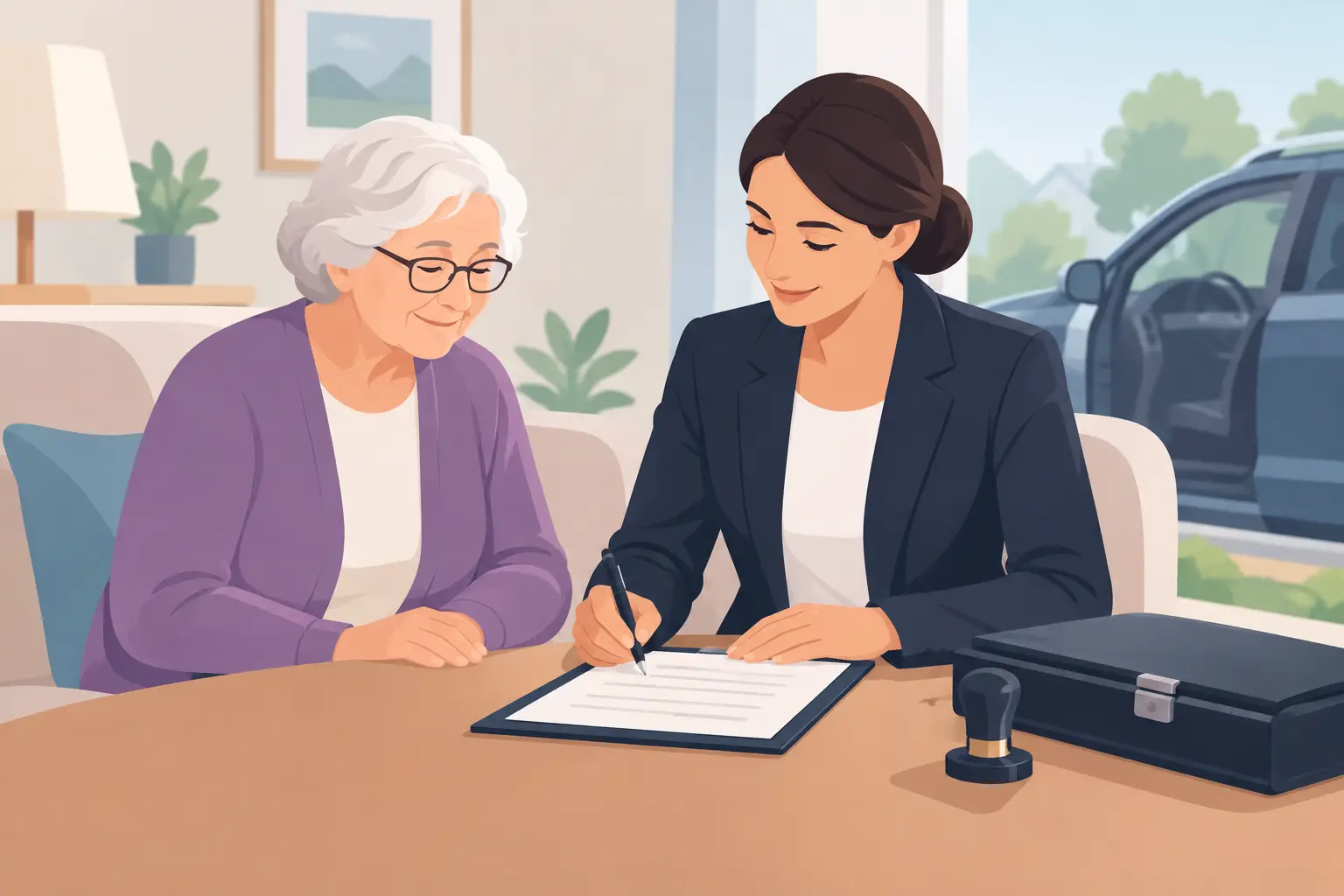
What to Expect From a Mobile Notary for Elderly Clients

A document may be ready to sign, yet getting a parent, spouse, or family member to an office can be the hardest part. A mobile notary for elderly clients brings the formal notarization process to a residence, senior community, hospital, rehabilitation facility, or other appropriate meeting location. The purpose is simple: make a necessary appointment more manageable without compromising the careful identity verification and signer protections that notarization requires.
Mobile service can be especially helpful for powers of attorney, estate-planning documents, affidavits, title paperwork, and certain real-estate documents. Convenience matters, but the appointment still follows a disciplined process. The signer must be properly identified, understand the basic nature of the document, and sign voluntarily.
When Mobile Notary Service Makes Sense
A mobile appointment is often a practical choice when mobility, transportation, recovery, or scheduling makes travel difficult. It can reduce stress for an older adult who is more comfortable signing at home, where glasses, identification, medication schedules, and needed support are close at hand.
It is also useful when several people need to be present. For example, an attorney may arrange execution of estate documents at a client's home, or a lender may coordinate a loan signing for a borrower who cannot readily travel. In Rhode Island, a local mobile notary can meet clients where a properly conducted appointment is most convenient.
That said, mobile service is not a substitute for legal advice. A notary verifies identity, witnesses the signature, and completes the required notarial certificate. The notary does not draft legal documents, explain legal consequences, select documents for a client, or determine whether a particular form meets someone’s estate-planning needs. When questions concern rights, ownership, inheritance, or the meaning of a power of attorney, an attorney should answer them before the appointment.
What a Mobile Notary for Elderly Clients Will Verify
The core responsibility of a notary is protecting the integrity of the signing. A calm home setting does not lessen those requirements. Before notarizing, the notary will need to confirm the signer’s identity with acceptable identification and make sure the signer is acting willingly.
A current government-issued photo ID is usually the most direct option, such as a driver’s license, state ID card, passport, or military ID. Identification requirements can vary by document and circumstance, so it is wise to confirm what is available when scheduling. Expired identification, a missing photo, or a name that does not match the document can create delays.
The notary will also speak directly with the signer. This is not meant to be intrusive. It helps confirm that the signer knows what they are signing and is choosing to sign it. Family members and caregivers can provide practical support, but they should not answer for the signer or pressure the signer to proceed.
If a signer appears unable to communicate a basic understanding of the signing, seems unsure about whether they want to proceed, or appears to be under pressure, the notary may need to pause or decline the notarization. That can feel disappointing in the moment, especially when family members have coordinated schedules. It is also an essential safeguard. A notary cannot make a legal determination of capacity, but cannot notarize a signature when the circumstances do not support a voluntary, aware signing.
Prepare the Appointment Before the Notary Arrives
Good preparation protects the signer’s time and helps the appointment remain calm. Gather the complete document package in advance, including every page and any attached certificates. Review it with the appropriate attorney, title company, lender, or issuing organization before the notary arrives.
Most importantly, do not sign the document ahead of time unless the receiving organization has given clear instructions that it should already be signed. Many notarizations require the signer to sign in the notary’s presence. Pre-signing can mean a second appointment or an unusable notarization.
Choose a quiet, well-lit area with a stable table or writing surface. If the signer uses reading glasses, a hearing aid, or mobility equipment, have those available. Allow enough time for the signer to read the document and ask any non-legal process questions. Rushing an elderly client through paperwork defeats the purpose of arranging a mobile visit.
If the document requires witnesses, confirm that requirement before scheduling. A witness and a notary are not automatically the same role. Some documents require one or more witnesses in addition to notarization, and the rules about who may serve can depend on the document and the organization receiving it. The notary can explain the appointment process, but an attorney or document provider should confirm the witnessing requirements.
Supporting the Signer Without Taking Over
Family members often arrange mobile notary appointments because they want to help. Their involvement can be valuable when it focuses on logistics: locating identification, setting up a comfortable space, coordinating witnesses, and ensuring the full document package is ready.
During the signing itself, the best support is often quiet support. Give the signer time to respond in their own words. Avoid coaching answers or directing the signer to complete a document they have not reviewed. If the signer wants a trusted person nearby, that may be appropriate, but the notary may ask to speak privately with the signer for part of the appointment. This helps preserve privacy and confirm that the decision is voluntary.
There are situations where extra planning is necessary. A signer with limited vision may need the document read to them by an attorney or trusted representative before the notarial appointment. A signer with limited hand strength may need a practical accommodation for signing. If the signer communicates through an interpreter, communication device, or other assistance, disclose that when booking so the process can be considered in advance.
Estate Documents Require Particular Care
Powers of attorney, wills, health care directives, trusts, and deeds can carry significant personal and financial consequences. The fact that a document is notarized does not automatically make it legally valid, nor does notarization confirm that its contents reflect the signer’s wishes. Proper execution may involve separate witness rules, attorney guidance, or recording requirements.
For this reason, it is generally best for an attorney or the document preparer to finalize the paperwork before the mobile notary arrives. The signer should have an opportunity to review the document without feeling rushed. If questions remain about what a provision means, stop and obtain legal guidance rather than asking the notary to interpret it.
This approach protects everyone involved. It gives the signer meaningful control over an important decision and helps family members avoid preventable disputes later.
Loan Signings and Time-Sensitive Documents
Older adults may also need mobile notarization for refinancing, reverse mortgages, home equity transactions, or property transfers. These appointments can include a substantial package of lender or title documents and may take longer than a standard notarization.
For loan signings, borrowers should review disclosures and direct transaction questions to the lender, loan officer, title company, or attorney. A trained signing professional can guide the borrower through the signing locations and ensure documents are completed as instructed, but cannot advise whether the loan terms are favorable or whether the borrower should proceed.
Gallo Notary Services provides appointment-driven notarial support with careful attention to identification, execution requirements, and client privacy. For a complex document package, sharing the document type and any witness needs when requesting an appointment helps ensure the right amount of time is reserved.
A Better Appointment Starts With a Clear Plan
The most respectful mobile appointments are not rushed. They allow an elderly signer to be comfortable, properly identified, and heard. They also recognize the limits of the notary’s role: a notary provides formal verification, not legal advice or family decision-making.
Before setting the appointment, confirm the document is complete, identify any witness requirements, have acceptable ID ready, and make sure the signer has had a fair opportunity to understand the paperwork. Those few steps create the conditions for a careful signing and the confidence that important documents were handled with the attention they deserve.
Comments